The four-day pop-up event was held at Hoa Mai park in mid-September to provide people with opioid use disorder with long-acting injectable buprenorphine
SEATTLE – The Seattle Fire Department (SFD), UW Medicine’s Harborview Downtown Programs, and partner agencies held a pop-up clinic at Hoa Mai park in Little Saigon on Sept. 9, 10, 11 and 12. The event’s purpose was to offer individuals with an opioid addiction a long-acting injection of buprenorphine which is a gold standard medication for opioid use disorder. A field-based, low-barrier approach has not previously been tried in the City for injectable buprenorphine, which is particularly effective among patients who are homeless or have unstable housing.
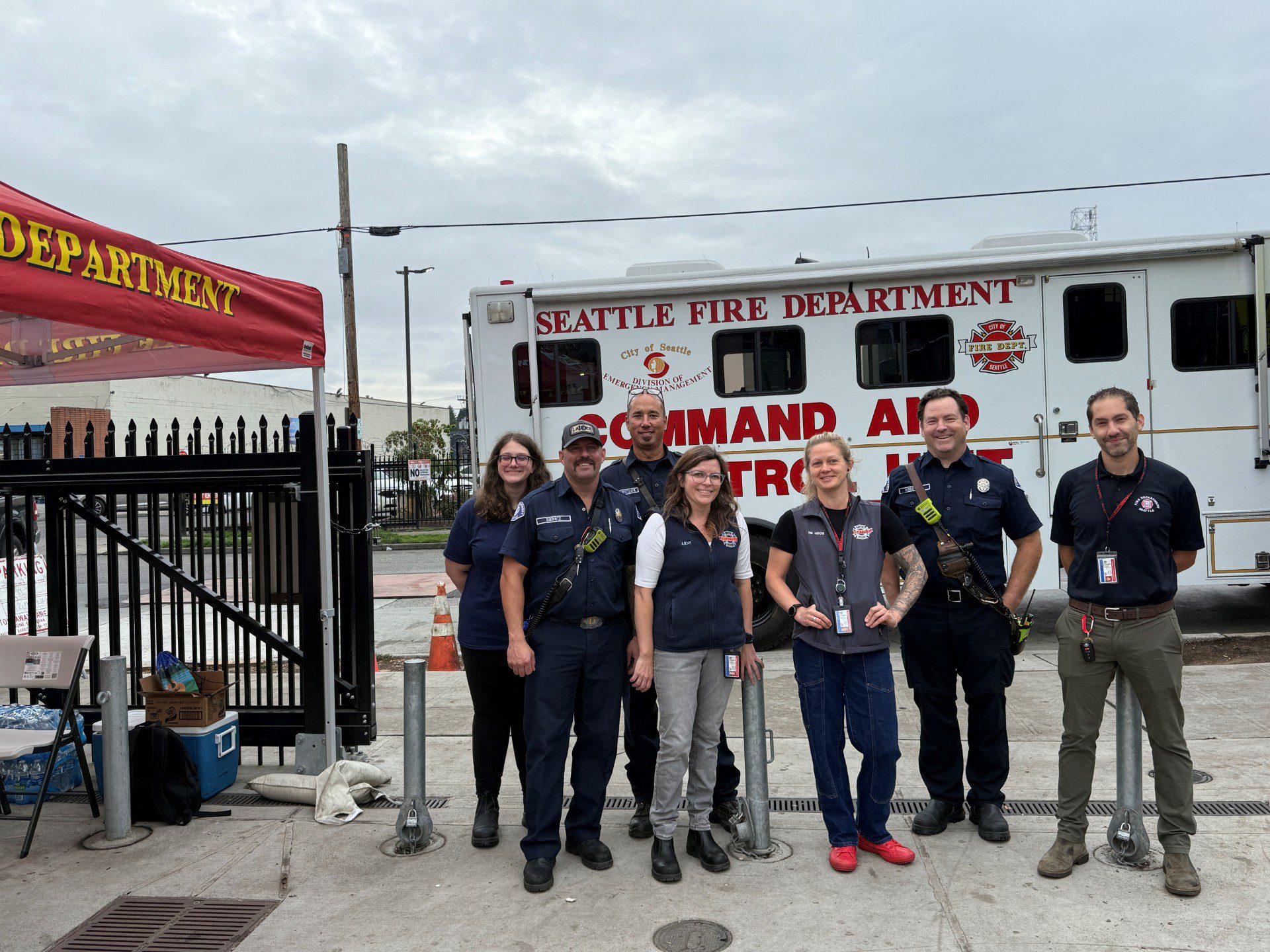
SFD Health One firefighter/EMTs, Seattle Human Services Department case managers and SFD’s advanced registered nurse practitioner (a Harborview employee working at Hobson Place Clinic) who work on the fire department’s Health 99 Post Overdose Response Team primarily staffed the event. Members of REACH and We Deliver Care were also on site to help bring their clientele to the site to connect them with this medication. The Hobson Place Clinic and newly established ORCA clinic were also key partners in implementing this service.
“Seattle continues to drive nationally leading strategies in our public health response to the opioid crisis, and this pop-up clinic is another example of our commitment to innovative, compassionate, and effective solutions. Treating people suffering from addiction and getting them the help they need is not only the right thing to do, it is the smart thing to do. We cannot stand by and watch people suffer on our streets; this initiative brings life-saving medication directly to those in need, creating real pathways to recovery,” said Mayor Bruce Harrell.
SFD’s Health 99 unit regularly administers buprenorphine in the field, through a strip that is placed under the tongue of a patient. This pop-up event focused on administering a different long-acting and extended-release form of buprenorphine that is injected. To create a same-day low barrier model that didn’t require pre-registration and met DEA dispensing regulations, SFD utilized in-clinic visits for the first dose. Patients were then given the option for subsequent doses in clinic or in the field. Patients who accepted this treatment at the pop-up event were transported to Hobson Clinic or the new ORCA Center to receive the initial shot, with instructions to return to the pop-up for the next two shots. Individuals also were connected with resources to receive additional doses beyond the operational dates of the pop-up clinic. SFD crews provided clinic transport, coffee, lunch and connected clients with the King County Street Medicine Team for on-site wound care and other services.
“We are currently responding to more than 60 patients per week experiencing a suspected opioid overdose across the City, and a percentage of those are happening in Little Saigon. We know there is a strong need to provide low-barrier access to this medication in this community, which is why we brought the long-acting form of buprenorphine to the field. Hosting this pop-up clinic would not have been possible without the support from service providers in our network,” said Fire Chief Harold Scoggins.
The three-shot series of injectable buprenorphine can be given to individuals at any stage of opioid addiction, without waiting for withdrawal to set in. This medication helps reduce cravings and reduce or eliminate their opioid use. The long-acting injected form of buprenorphine provides about a month of protection from opioid overdose, and follow-up doses extend this timeframe. Relief of craving opioids provides an opportunity for engaging patients in conversation about treatment, recovery, and social service connections.
Participation in the clinic went beyond SFD’s initial estimates. Thirty-three clients received their first injection at Hobson Clinic, the ORCA Center or Pioneer Square Clinic. More than half subsequently received a second or third shot and one client was assisted starting on methadone. Several more began oral buprenorphine and one followed his injection course with an inpatient recovery admission. Throughout, SFD, REACH, Street Medicine, We Deliver Care, and other on-site partners made contact with nearly 200 individuals, providing naloxone, wound care, information, food and connection with other service partners.
“This clinic far exceeded even our most optimistic expectations. It showed starkly how high a demand there is for opioid treatment medication and how vital it is to bring care directly into the community. We hope that this trial can serve as a model for similar events in the future,” said SFD’s Mobile Integrated Health Program Manager Jon Ehrenfeld.
The department’s post-overdose response unit Health 99 has responded to more than 1,377 overdoses since it launched. Further, in 2024, Public Health – Seattle and King County reported that 568 people died of drug overdoses in Seattle, and 340 year to date.
The buprenorphine pilot is supported by additional public health investments in Mayor Harrell’s 2025 proposed budget, with $14.5 million specifically dedicated to addressing the opioid crisis.
What people are saying
“In just four days dozens began treatment with long-acting injectable Buprenorphine and nearly 200 people received care and connections—clear proof that demand is high and access matters. HSD is grateful for Seattle Fire’s leadership and teamwork to deliver evidence-based treatment that helps people move toward recovery.”
Director Tanya Kim, Human Services Department
“Being able start someone on life-saving medication like buprenorphine without the need for an initial period of withdrawal is particularly important for people experiencing homelessness. A recent publication from DESC demonstrated that a novel method of starting long-acting injectable buprenorphine can be very effective for starting treatment while avoiding opioid withdrawal. The collaboration between SFD and Harborview rapidly put this emerging evidence into practice on the behalf of dozens of vulnerable people experiencing homelessness in downtown Seattle. Our clinical teams and partners will continue innovating and working tirelessly to make addiction treatment available to everyone who needs it.”
Medical Director Dr. Jared Klein, Pioneer Square Clinic and Downtown Programs